Construction next door. Traffic on Ngong Road. The neighbour’s TV through the wall. Nairobi is loud. Your home doesn’t have to be.
If you live in Kilimani, Westlands, Upperhill, or along any major Nairobi road, you know the soundtrack: matatu horns at 6am, construction drills at 8am, and the general hum of a city that never fully quiets. Your walls keep out the rain. They rarely keep out the noise.
The Interior Design Approach to Sound
Full acoustic engineering — sound-rated walls, isolated floors, acoustic ceiling systems — is expensive and usually reserved for commercial spaces. But interior design offers a surprisingly effective middle ground. The principle is simple: soft, dense, and layered surfaces absorb sound. Hard, flat, reflective surfaces amplify it.
Soft Furnishings as Acoustic Buffers
A room with a tile floor, bare walls, and leather furniture is an echo chamber. Add a large wool or sisal rug, linen curtains that pool on the floor, upholstered furniture, and a fabric headboard, and you’ve dramatically reduced the room’s reverberation time.
Heavy curtains deserve special mention. Floor-to-ceiling, fully lined curtains don’t just block light — they absorb significant sound energy, particularly at the window, which is typically the weakest acoustic point in any room.
Thick-Paneled Cabinetry
Here’s where Kayjah’s joinery contributes beyond aesthetics. Thick-paneled ZBOM wardrobes and wall units — built with 18mm engineered board and backed against shared walls — add a meaningful layer of mass between you and your neighbour. A floor-to-ceiling bookshelf filled with books is one of the most effective sound barriers you can install in an apartment, and it looks far better than acoustic foam.
Fluted and Slatted Wall Panels
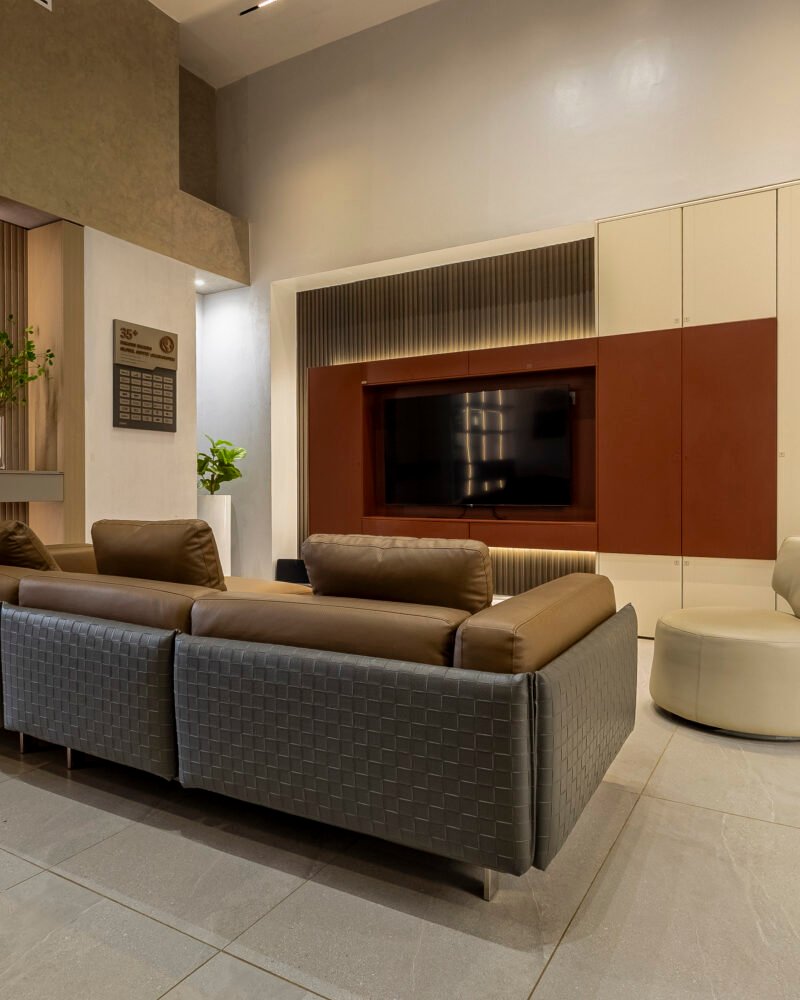
The fluted wall panels that are trending in Nairobi living rooms aren’t just decorative. The vertical grooves break up sound waves, scattering reflections instead of bouncing them directly back. Combined with an acoustic felt backing, fluted panels can reduce noise transfer noticeably.
The Home Office Priority
For remote workers — and Nairobi has a growing population of them — a quiet home office is a professional necessity. Position your desk away from windows facing the street. Use a bookshelf or cabinet as a wall buffer. Add a thick rug and fabric curtains. Consider an acoustic ceiling panel if the room above generates footfall noise.
You can’t silence Nairobi. But you can design a home that turns down the volume.