You’ve stayed in a five-star hotel and loved the feeling. The robe hanging just so. The lighting soft and warm. The drawers gliding open. That feeling isn’t about the hotel — it’s about the design. And you can have it at home.
There’s a reason you sleep better in a good hotel. It’s not the mattress — though that helps. It’s the absence of visual clutter. The thoughtful lighting. The fact that everything has a place and nothing is on display that shouldn’t be.
The “Hotel-at-Home” movement takes these principles and applies them to your master bedroom. And the centrepiece is the walk-in closet.
Why a Walk-In Changes Everything
A conventional wardrobe — even a large one — keeps your clothes in the same room where you sleep. Every morning starts with open doors, visible clutter, and the daily wardrobe negotiation conducted in your sanctuary space.
A walk-in closet moves all of that into a dedicated room. Your bedroom becomes a sleeping space — clean, calm, and uninterrupted. You get dressed in the closet, close the door, and your bedroom remains a retreat.
What Makes a Walk-In Work
A walk-in closet doesn’t need to be enormous. A 2.5m x 2m space — roughly the size of a small bathroom — is enough for a well-designed single-person closet. A 3m x 3m space serves a couple comfortably.
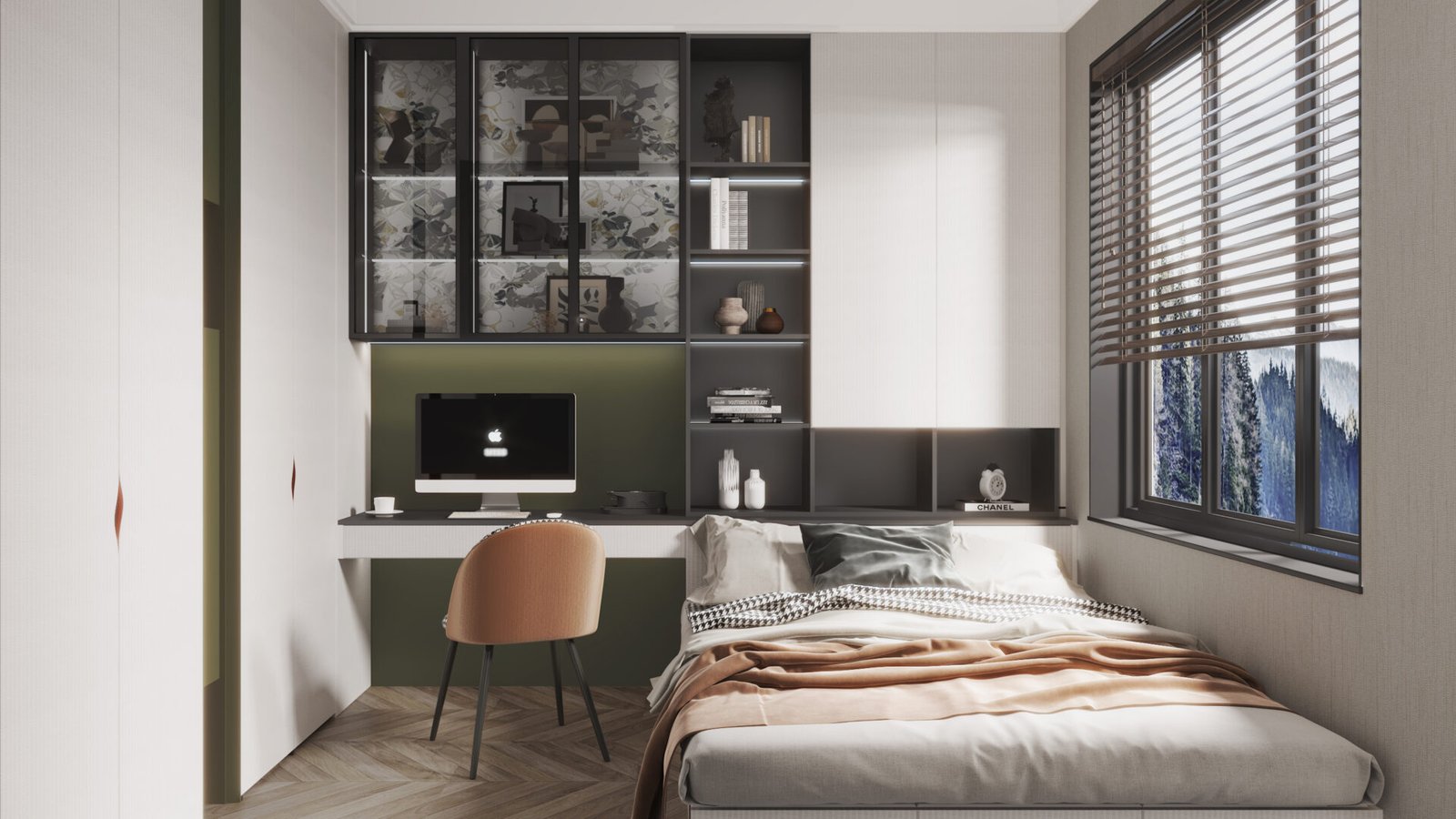
The design principles: maximise vertical space with double-height hanging rails (long garments below, folded items above). Use pull-out drawers instead of shelves — drawers keep contents visible and accessible without stacking. Install internal LED lighting that activates when you open drawers or doors. Dedicate a section to accessories — shoes on angled shelves, bags on lit display hooks, jewellery in velvet-lined pull-outs.
ZBOM’s walk-in systems are modular, meaning they adapt to any room shape. L-shaped, U-shaped, galley-style — the configuration follows the architecture, not the other way around.
The Lighting Detail
Hotels invest heavily in lighting because they understand its effect on mood. In a walk-in closet, warm LED strip lighting along shelf edges, inside glass-door compartments, and under hanging rails transforms the space from storage room to dressing room.
Motion-activated cabinet lights mean you never fumble in the dark. Backlit mirrors provide even, shadow-free illumination for dressing. These details cost very little but change the experience entirely.
Is It Worth the Space?
In a large Karen or Runda home, dedicating a room to a walk-in is straightforward. In a Kilimani apartment, it requires more creativity — perhaps converting a small adjacent room or partitioning part of a large master bedroom.
The question to ask isn’t “can I afford the space?” — it’s “can I afford to start every morning in visual chaos?” The hotel doesn’t think so. Neither should you.