Handleless cabinetry creates a clean, architectural look through J-pull, push-to-open and finger-groove systems. The right choice balances aesthetics, ergonomics, durability and precision while maintaining a consistent design language.
Handleless cabinetry creates a clean, architectural appearance by allowing doors and drawers to read as continuous surfaces. But “handleless” refers to several different systems, each with its own balance of aesthetics, ergonomics, maintenance and durability.
Thank you for reading this post, don't forget to subscribe!J-Pull: The Defined Line
A J-pull uses a recessed profile along the edge of the cabinet front, creating an integrated grip and a subtle shadow line.
It offers a comfortable, reliable grip and works particularly well on frequently used cabinetry. The profile can remain discreet or be specified in aluminium to introduce a contrasting material detail.
Best for: kitchens, wardrobes and long cabinetry runs where a strong horizontal or vertical line complements the design.
Push-to-Open: The Seamless Surface
Push-to-open mechanisms release the door or drawer when pressed, keeping the front completely flat. This creates the most minimal and uninterrupted expression.
The trade-off is functionality. Heavy drawers and frequently used doors can be less comfortable, while the mechanism requires accurate installation and consistent door alignment.
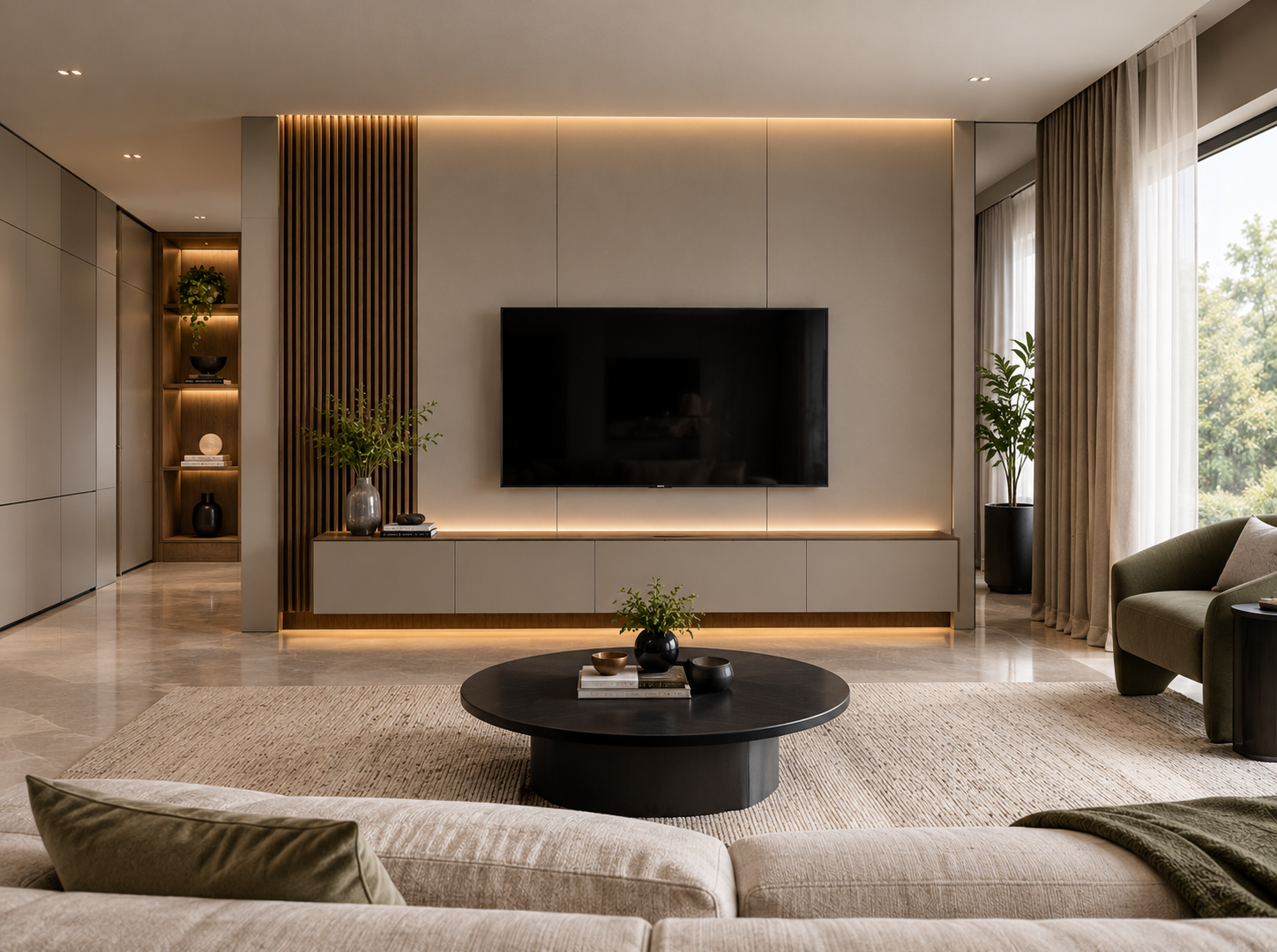
Best for: TV walls, living-room cabinetry, upper cabinets and spaces where visual simplicity is the priority.
Finger-Groove: Integrated and Tactile
A finger-groove is formed directly into the edge of the cabinet front, creating a recessed grip without adding a separate profile.
It offers a refined, material-focused appearance and works particularly well where you want the cabinetry to feel integrated rather than hardware-led. Grooves, however, can collect dust and grease and require regular cleaning.
Best for: wardrobes, bedrooms, living areas and kitchens where the detailing can be carefully integrated into the material.
What Should You Consider?
Ergonomics: A handleless design should still feel natural to use. Frequently accessed drawers and heavy doors need a secure grip.
Scale: Large fronts require enough leverage. Minimalism should not come at the expense of functionality.
Maintenance: Kitchens demand more attention because grease, dust and constant handling can affect grooves and profiles.
Hardware: Quality hinges, runners and push mechanisms are essential to ensure smooth operation and long-term performance.
Precision Is Part of the Design
Handleless cabinetry leaves very little room for visual error. Uneven reveals, inconsistent gaps and misaligned fronts become immediately visible.
Accurate carcass construction, quality hardware and precise installation are therefore critical. Consistent reveals, datums and vertical alignment are what give a handleless elevation its refined architectural character.
One Design Language, Different Systems
There is no need to use the same mechanism throughout an entire interior. A kitchen may benefit from J-pulls for everyday use, a TV wall from push-to-open for a seamless surface, and wardrobes from finger-grooves for integrated detailing.
The strongest interiors maintain a consistent visual language while allowing the mechanism to respond to how each space is actually used.
Handleless cabinetry works best when aesthetics, proportion, materiality and ergonomics are resolved together.